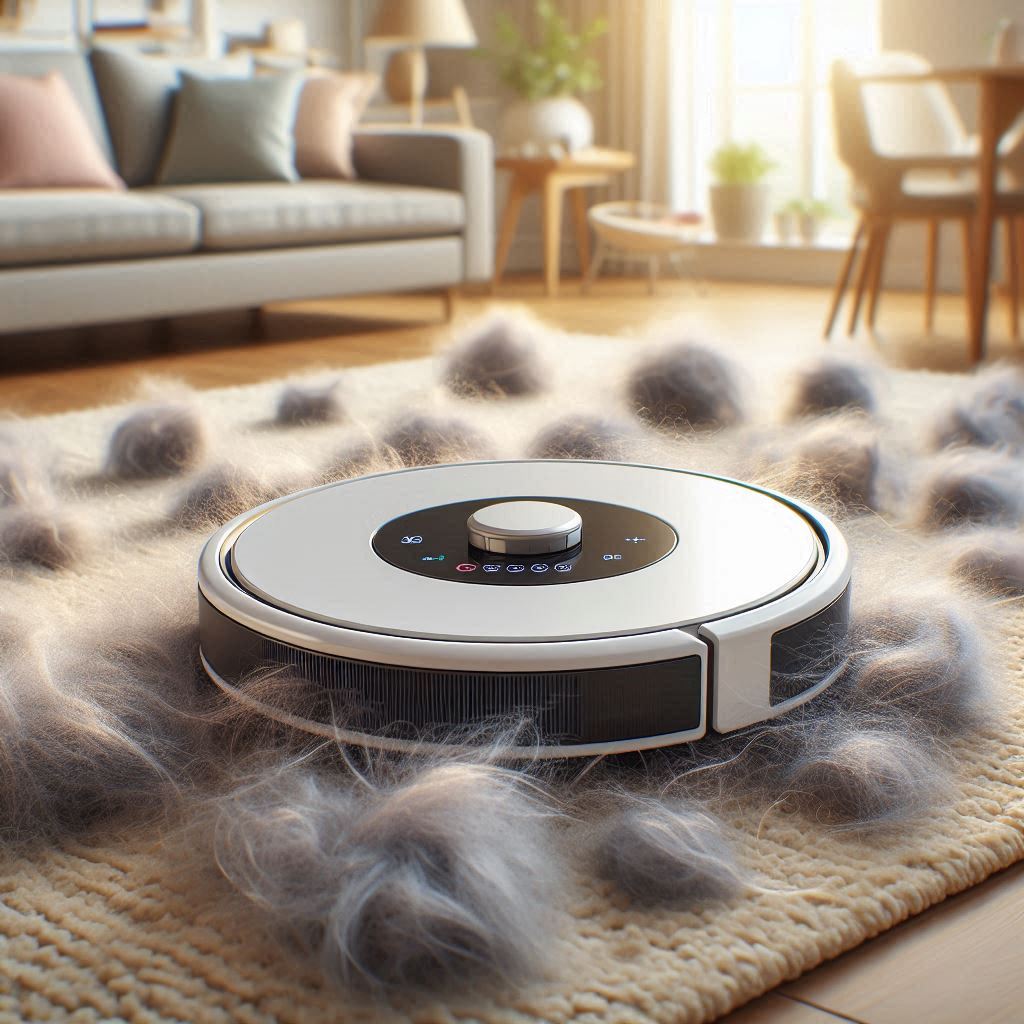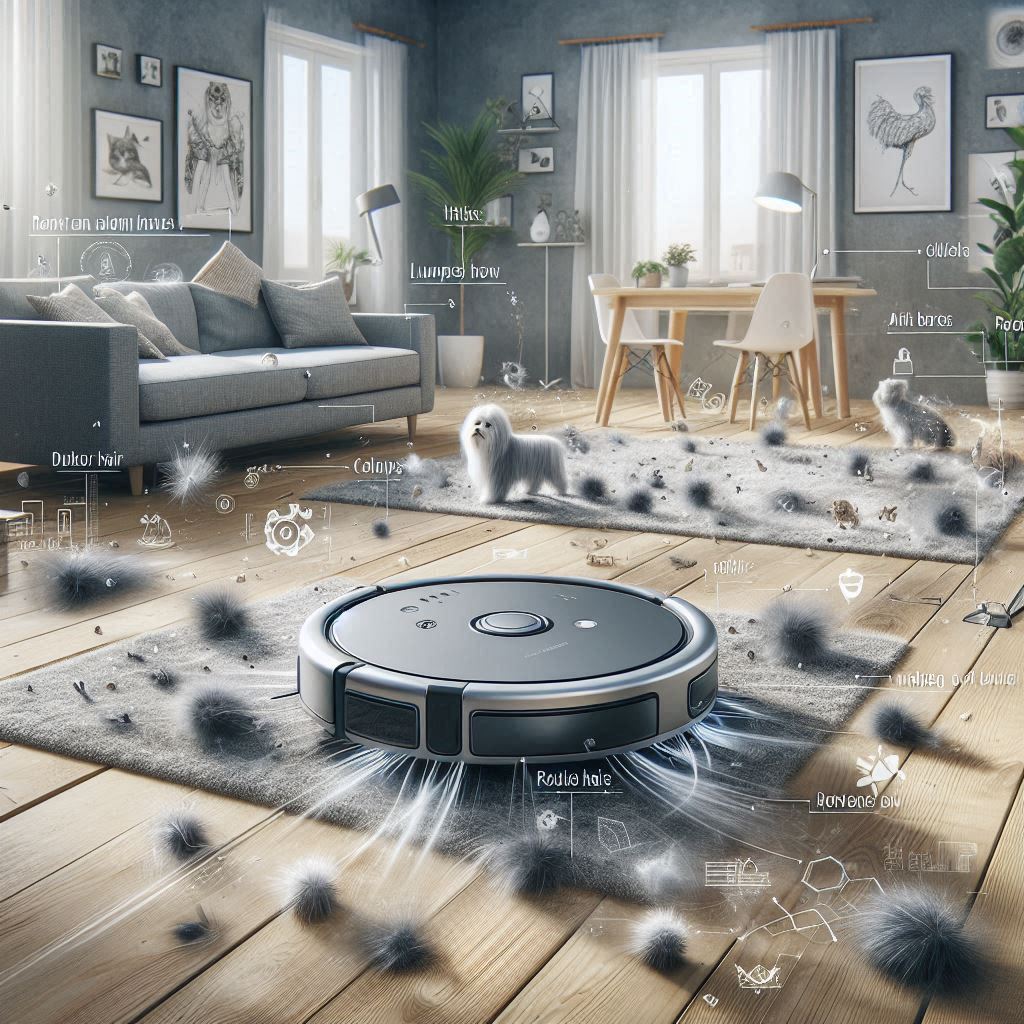
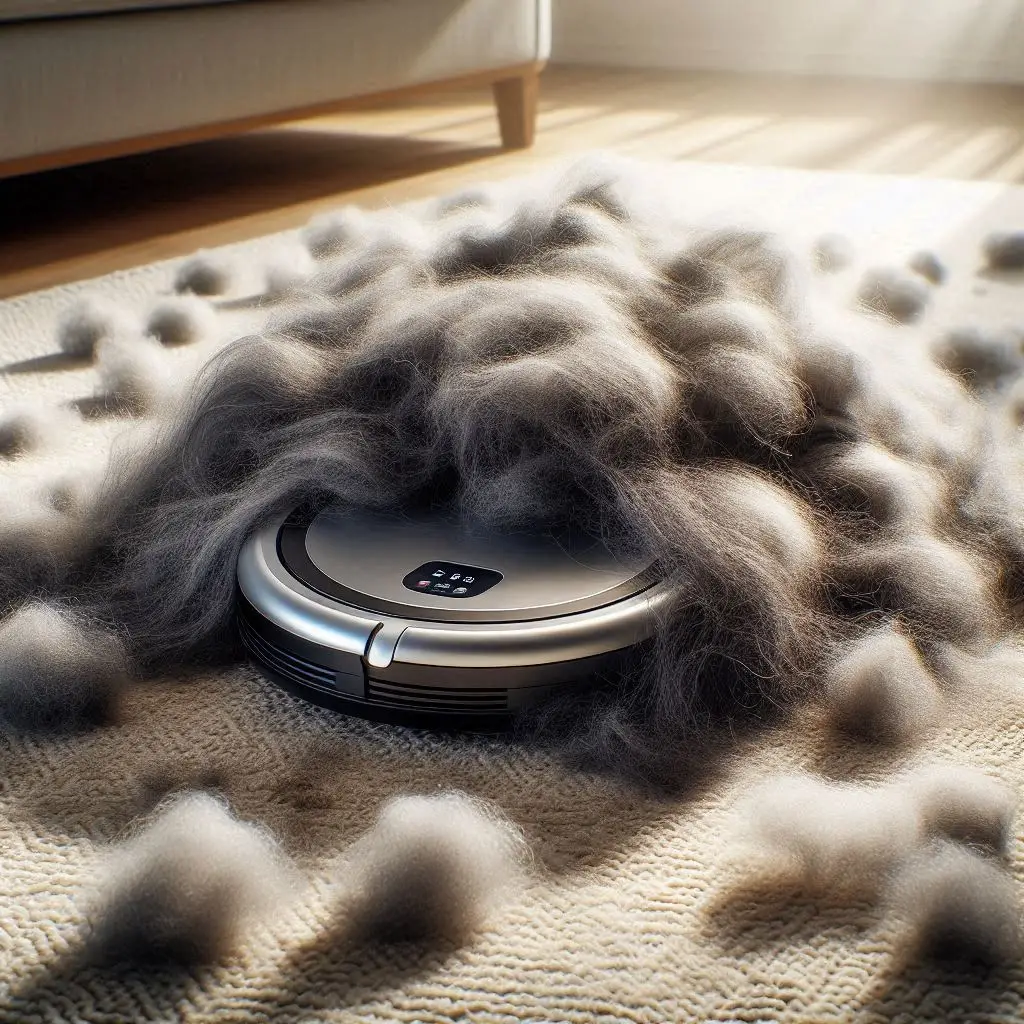
Pet owners love the convenience of robot vacuums press start, walk away, and come back to clean floors. But the reality isn’t always that simple. One of the most common complaints among dog and cat owners is that their robot vacuum gets stuck on pet hair. Whether it’s tangled around brushes, clogging sensors, or jamming wheels, pet hair can turn “automatic cleaning” into a constant babysitting task.
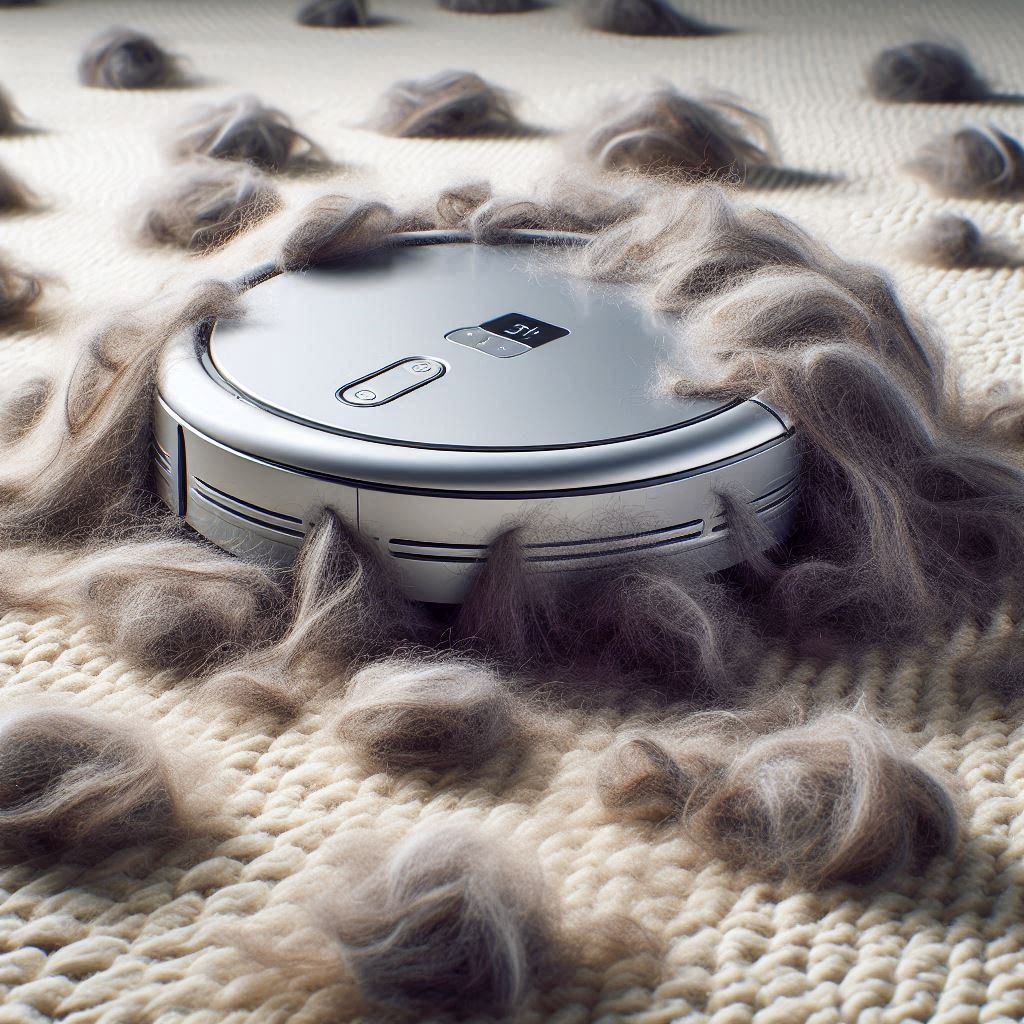
In this detailed guide, we’ll break down why robot vacuums struggle with pet hair, how to fix the issue, and which models on Amazon handle it best.
Why Robot Vacuums Get Stuck on Pet Hair
While pet hair seems light and harmless, it becomes a serious obstacle for cheaper or outdated robot vacuum systems. Here are the main technical reasons:
1. Brush Tangles & Hair Wrap
Most budget robot vacuums use traditional bristle brushes. These brushes grab hair aggressively, but instead of lifting it into the suction path, hair wraps tightly around the roller. With enough buildup, the roller jams, causing the vacuum to stop and display errors like:
- “Brush blocked”
- “Main roller stuck”
- “Please check brush”
Pet owners with golden retrievers, huskies, or long-haired cats experience this almost daily.
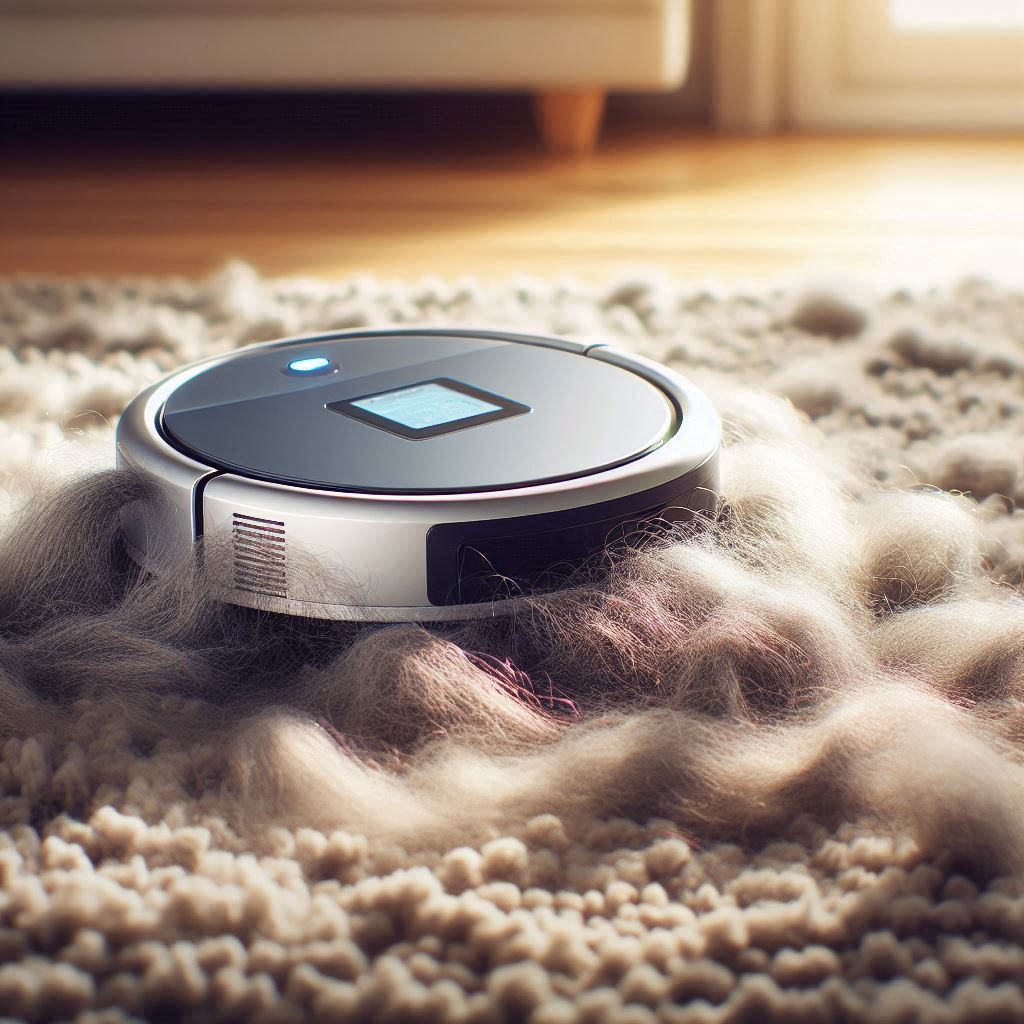
2. Weak Suction Can’t Pull Hair Through
Long pet hair needs stronger suction to actually move through the system. Low-power robots leave hair stuck in the:
- roller
- intake path
- wheels
This is especially noticeable on carpets and rugs where hair settles deep.
3. Wheels Jammed by Hair
Hair doesn’t only tangle brushes—robot wheels also suffer. Hair wraps around wheel shafts, causing the vacuum to drag or stop entirely. Users often notice errors like:
- “Wheel blocked”
- “Robot stuck”
This is common on homes with high-pile carpets + hairy pets.
4. Sensors Confuse Hair as Obstacles
Some vacuums use optic sensors to detect drops, walls, or objects. Clumps of hair can trigger:
- false object detection
- cliff avoidance errors
- corner hesitation
Especially common as hair collects in corners where robots like to spin.
5. Carpet Fiber + Pet Hair Combo
The worst combination for robots is:
✔ long hair
✔ thick carpet
Here the robot needs high suction, rubber brushes, and adaptive rollers—otherwise it stalls, drags, or simply shuts down to avoid overheating.
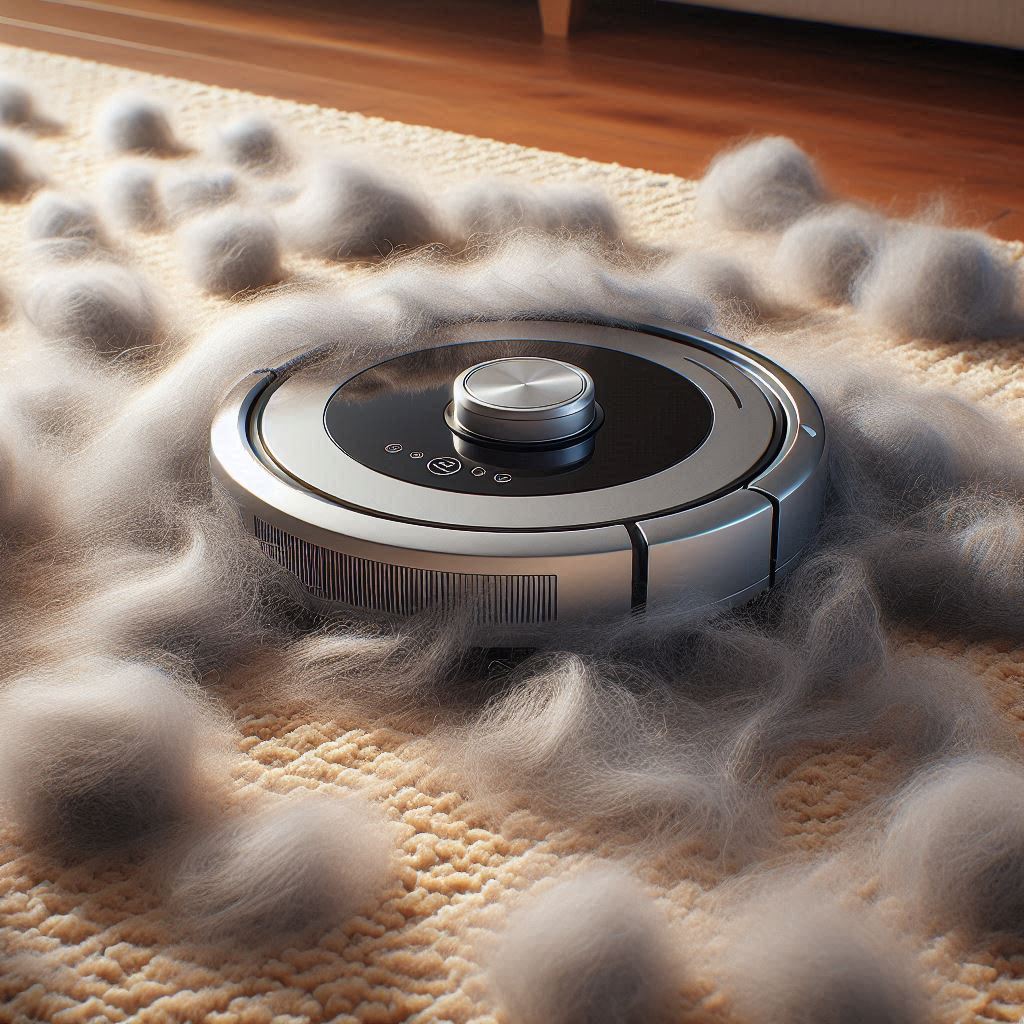
Real-World Scenario Example
Imagine a home with:
- a shedding golden retriever
- medium pile carpet
- corner dust bunnies
- sofa shedding zones
A cheap $120 robot vacuum will:
❌ get stuck on rollers
❌ get tangled every 7–10 min
❌ fill bin quickly
❌ overheat from hair clogging
While a higher-end pet-specific vacuum will:
✔ lift hair in a single pass
✔ keep rollers tangle-free
✔ auto-empty bin (if docked)
✔ map efficiently
✔ run daily without babysitting
How to Prevent Robot Vacuums From Getting Stuck on Pet Hair
Good news—there are solutions. Here are fixes that actually work:
1. Choose Rubber Brushes Instead of Bristle Brushes
Rubber brushes don’t trap hair the same way. They bend and flick hair into suction instead of wrapping around the roller.
This reduces:
✔ tangling
✔ jamming
✔ maintenance
2. Prioritize High Suction Robots
Look for models offering:
- 2000Pa–5000Pa suction (ideal range for pet homes)
- Carpet Boost Mode
- Auto Turbo Suction on hair zones
3. Use Self-Cleaning or Auto-Empty Systems
Bins fill faster in pet homes. A robot that empties itself increases efficiency dramatically.
Good for:
✔ multi-pet
✔ heavy shedding
✔ busy households
4. Grooming Routine Helps More Than You Think
Brushing your pets frequently reduces daily floor shedding dramatically. This indirectly helps the robot operate freely.
5. Vacuum Mapping + Smart Navigation
Robots that get stuck often lack:
- LiDAR mapping
- SLAM navigation
- multi-floor mapping
Smart navigation means fewer stupid pauses like:
“Robot stuck. Please assist.”
Amazon Buyer Intent Section: Best Robot Vacuums That Don’t Get Stuck on Pet Hair
Now for the affiliate-style section. If someone lands on your page from Google searching “robot vacuum stuck on pet hair,” they already have buyer intent. So we introduce “best recommendations.”
Below are categories (no specific brands named unless you want):
★ Best Overall for Pet Hair
Ideal features:
✔ dual rubber rollers
✔ strong suction
✔ auto-empty base
✔ mapping
✔ quiet mode
Perfect for homes with heavy shedding + carpets.
★ Best Budget Option
Good for:
✔ smaller apartments
✔ single-pet homes
✔ hard floors
Not ideal for:
❌ high carpets
❌ dual shedding pets
★ Best for Long Hair Pets (Huskies, Persians, Goldens)
Look for:
✔ anti-tangle brushes
✔ turbo carpet mode
✔ wheel anti-wrap protection
★ Best for Allergy-Friendly Homes
Prioritize:
✔ HEPA filters
✔ sealed dust bins
✔ hypoallergenic air output
Great for owners with pet dander sensitivity.
User Experience & Reviews Feedback Overview
Amazon reviews consistently highlight these patterns:
Positive feedback:
- Works daily without babysitting
- Handles long cat/dog hair easily
- Auto-empty dock is life-changing
- Less manual cleaning & cutting hair
Negative feedback (cheap models):
– stops every 10 min
– brush constantly jammed
– weak suction for carpet hair
– needs constant human rescue
Is It Worth Upgrading?
If you currently own a cheap robot vacuum that keeps getting stuck on pet hair, upgrading is 100% worth it. Not because expensive is fancy—but because pet hair requires the right mechanical design.
Upgrading gives you:
✔ less maintenance
✔ less noise
✔ more cleaning coverage
✔ healthier air
✔ less manual vacuuming
✔ more time saved
If your robot vacuum is constantly getting stuck on pet hair, the issue is not your home—it’s the wrong type of vacuum. Pet hair demands:
- rubber rollers
- strong suction
- smart navigation
- low-tangle design
- good filtration
Once these needs are met, robot vacuums evolve from “annoying gimmick” to “essential home helper.”
For pet owners, especially those with shedding breeds, investing in the right robot vacuum becomes less of a luxury and more of a necessity.

Related Posts