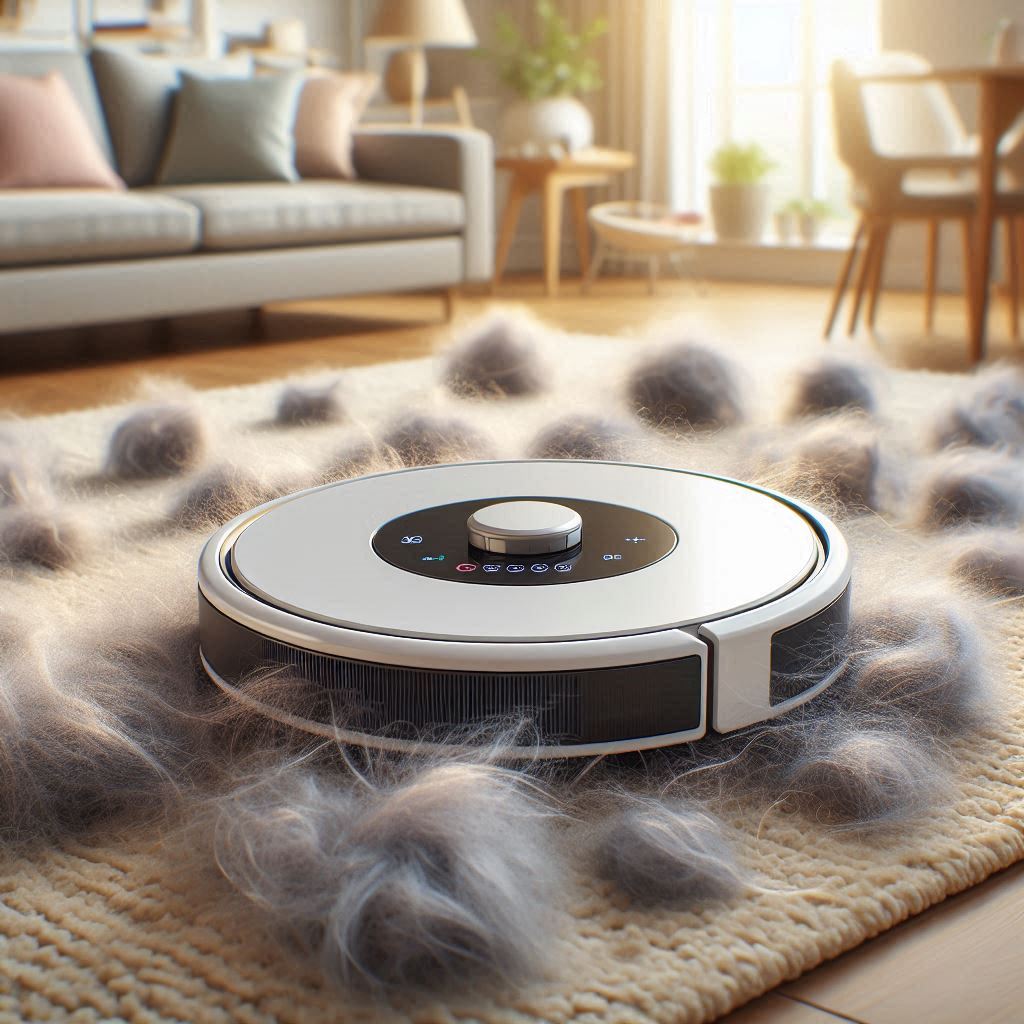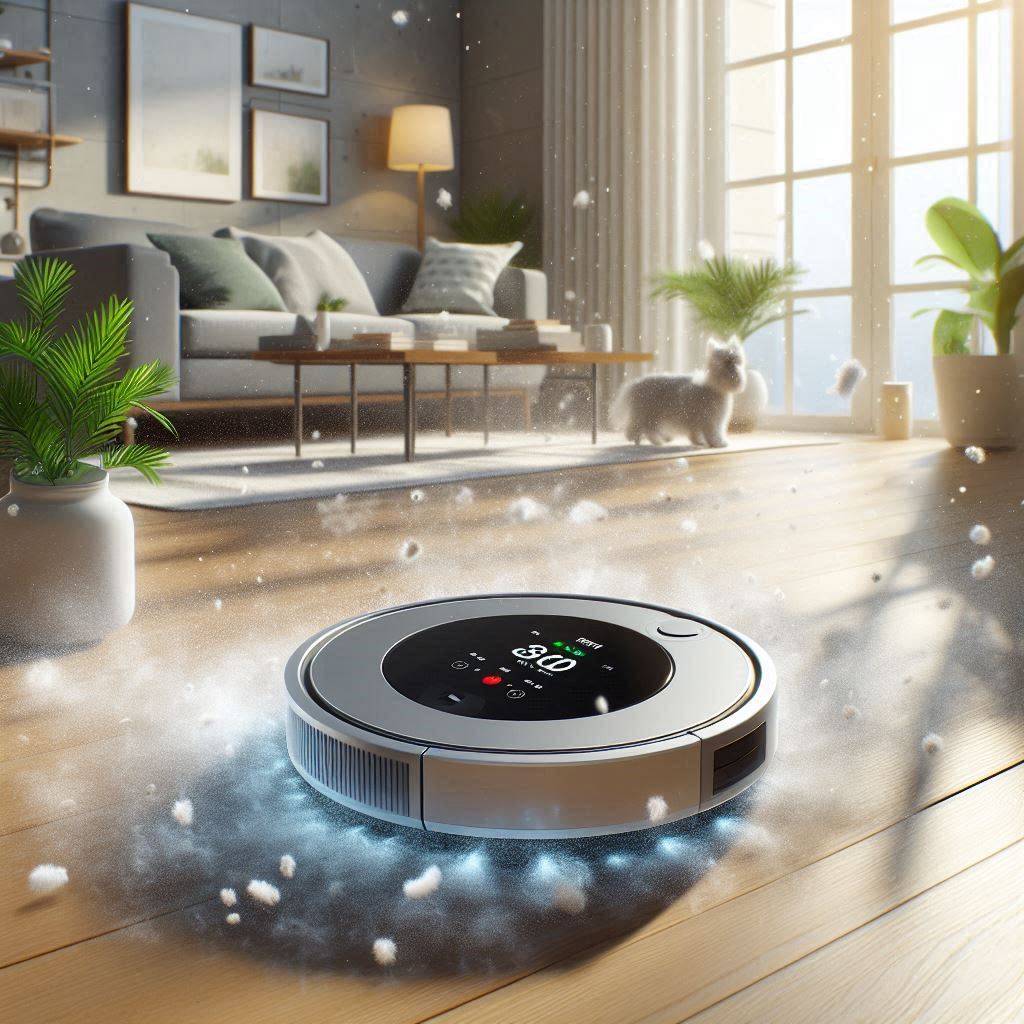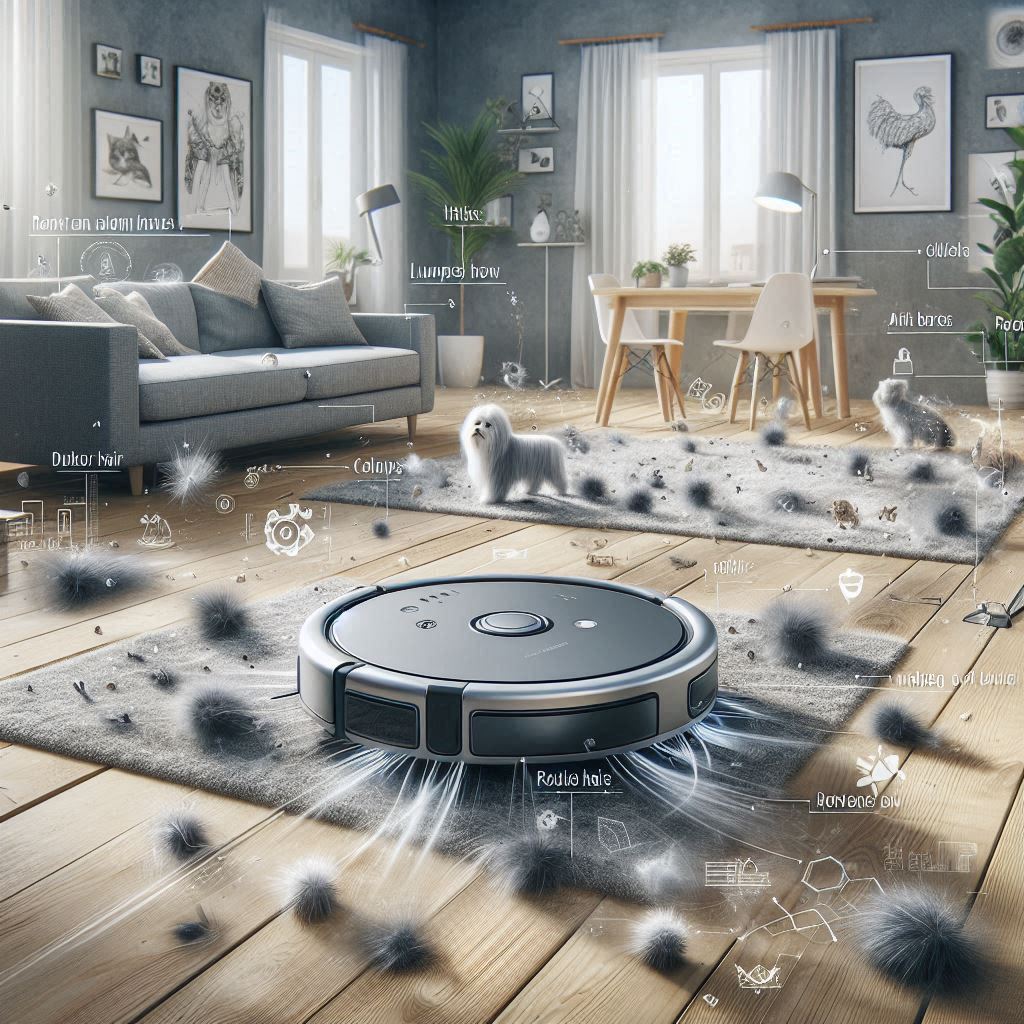
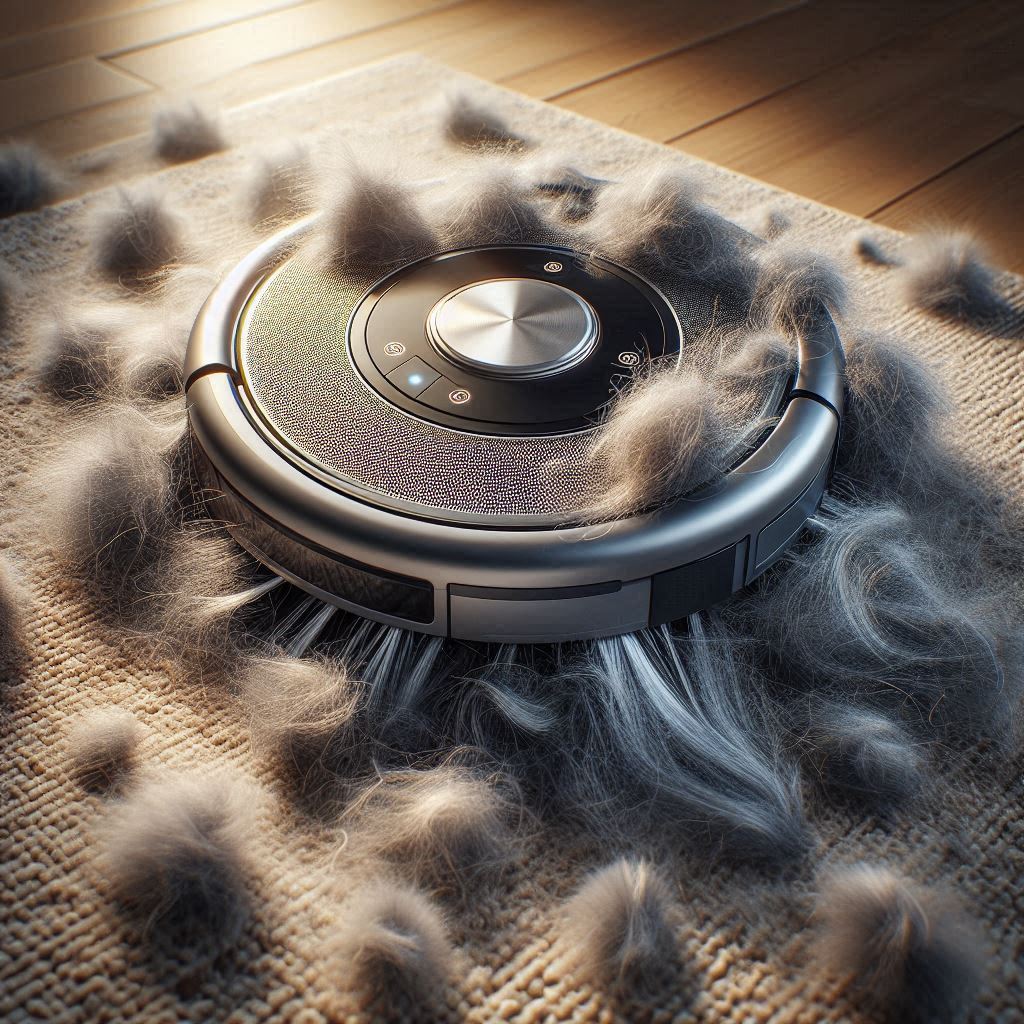
Most new pet owners assume that a robot vacuum with strong suction is all they need to fight fur, shedding and dander. But then a strange thing happens: instead of being picked up, pet hair begins sticking to the robot body, sensors, wheels, edges, and even the charging contacts — thanks to static cling.
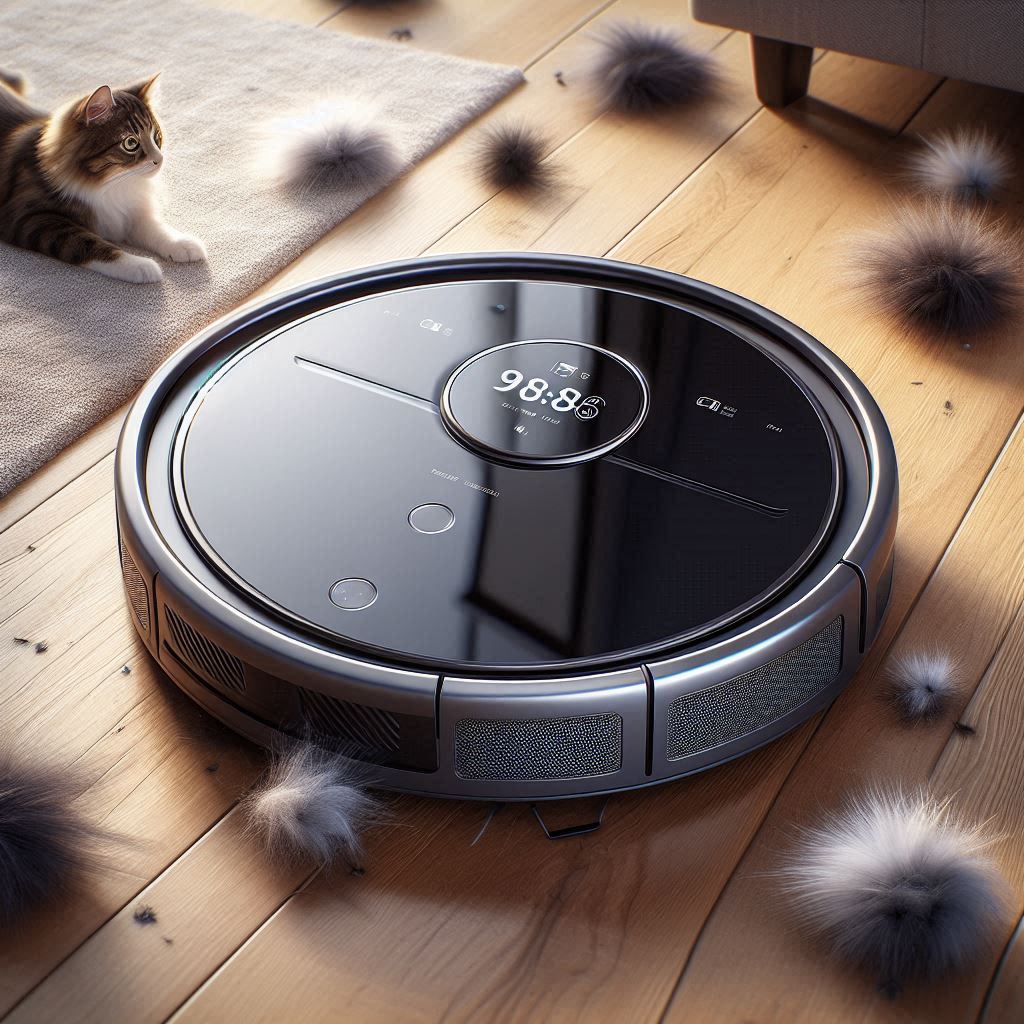
This phenomenon has now become one of the most frequently mentioned complaints in buyer reviews across Amazon, especially from owners with long-haired cats and dogs. They often describe it as:
“Hair is stuck all over the vacuum body.”
“It cleaned the floor but now the robot is wearing a fur coat.”
“Static makes it carry hair from room to room.”
Static cling is more than a visual frustration. It affects cleaning efficiency, filter lifespan, sensor accuracy, and even triggers allergy problems in sensitive households.
This long-form guide breaks down:
✔ Why static cling occurs
✔ Which breeds create the worst static problems
✔ Real-world pet scenarios
✔ How to fix & reduce the issue
✔ 2026 robots that handle static better
✔ Who should avoid low-grade robots
✔ Amazon buyer-style recommendations
If you’re researching before buying (or trying to improve your current robot), this can save you money and headaches.
What Causes Static Cling With Pet Hair?
Static cling happens when friction builds an electrical charge between pet fur and surfaces the robot touches. Three scientific factors matter most:
1. Low Humidity
Dry air makes static charge stronger. Winter and AC-cooled homes are more susceptible.
2. Synthetic Floors
Vinyl, laminate, and synthetic rugs are notorious for building static electricity.
3. Hair Type & Fiber Weight
Pet hair isn’t uniform — breeds with longer, lightweight strands carry more static charge than short-haired breeds.
Breeds That Produce High Static Fur
Certain households are simply “high static hair environments” by default. The following breeds are top offenders:
Golden Retriever long fiber + undercoat shed
Samoyed light airborne fur
Husky high seasonal shedding
Persian Cat fine static hair + soft coat
Maine Coon long hair + dander
Short-haired breeds like Beagle or Siamese shed too, but their fibers don’t cling as easily.
Where Static Cling Causes Problems Inside Robot Vacuums
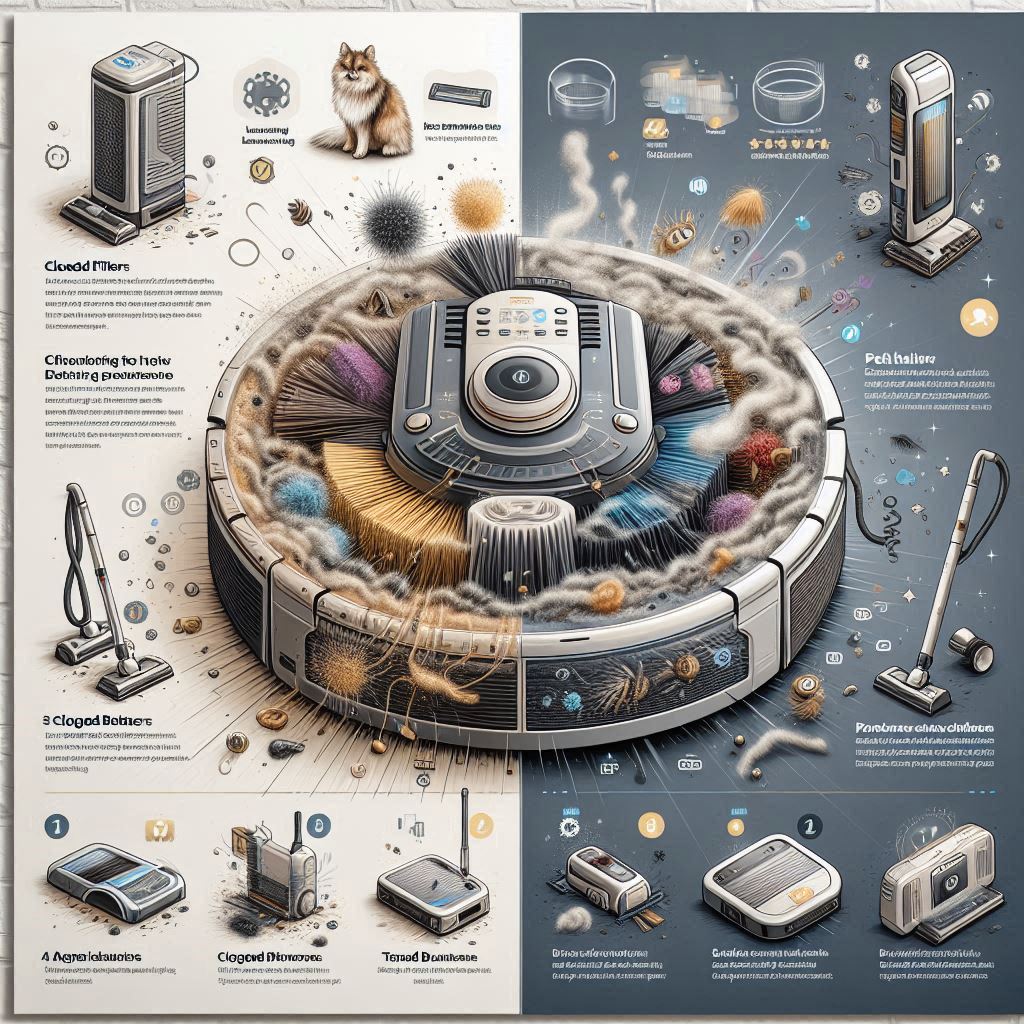
Static fur doesn’t only stick on the outside — it infiltrates crucial components, reducing performance.
Common affected parts:
✔ main brush bearings
✔ side brushes
✔ bin sensors
✔ lidar dome
✔ cliff sensors
✔ charging contacts
✔ caster wheel housing
✔ filter housing
✔ fan chamber
Worst case scenarios include:
bin not registering as full
lidar misreading wall boundaries
side brushes slowing due to friction
blocked airflow around filter
Ironically, some robots that are great at suction make static cling worse because they generate more airflow friction.
Real Household Scenarios (Based on Amazon User Patterns)
Static cling appears more commonly in these environments:
Apartments with central heating
Winter-season shedding
Synthetic floor cleaners used regularly
Air conditioners running daily
Polyester upholstered furniture
Carpets with nylon fibers
Customers often report:
“The robot moved fur from the bedroom to the hallway and left it stuck to its body.”
Cleaning efficiency drops by 15–30% depending on microfiber buildup.
Solutions for Reducing Static Cling With Pet Hair
Static cling cannot be eliminated entirely, but it can be drastically reduced using smart techniques:
✔ Solution #1 — Humidity Control (Most Effective)
Increasing humidity from 20% → 40% almost destroys static in typical households.
Ways to achieve:
- humidifiers
- stove-top water steam
- drying laundry indoors
✔ Solution #2 — Anti-Static Mop Kit (Compatible With Many Robots)
Some modern vacuum-mop combos include conductive mop attachments that ground static charge.
✔ Solution #3 — Rubber Brush Rollers (Game Changer)
Rubber rollers reduce friction → less static → cleaner bearings.
They also resist hair wrap better than bristle rollers.
✔ Solution #4 — Anti-Static Coating Sprays
Approved sprays for floor surfaces reduce friction, especially on synthetic laminates.
✔ Solution #5 — Routine External Wiping
Microfiber cloth + anti-static cleaner prevents hair accumulation around sensors.
2026 Robot Vacuum Models That Handle Static Better
Here are top categories based on real-world performance for pet owners:
1. Best Overall Anti-Static Pick — Premium Pet Robot
Ideal For: multi-pet households + synthetic floors
Key Features Buyers Value:
✔ rubber roller system
✔ large suction fan but controlled airflow
✔ grounded chassis design
✔ lidar mapping for wall tracking
✔ auto-empty dock for continuous airflow
Why It Works for Static:
- less friction = less charge buildup
- dock empties hair before accumulation
- sensors remain cleaner longer
Best For Breeds:
→ Huskies
→ Golden Retrievers
→ Persian Cats
2. Best Budget Option With Reduced Static Scatter
Ideal For: short-hair dogs + hard floors
Features include:
✔ lower friction side brushes
✔ moderate suction to avoid hair scattering
✔ washable filters
Great for customers upgrading from broom + stick vacuum system.
3. Best for Allergy Owners
Pet homes with allergy sensitivity need two things:
- sealed HEPA filtration
- clean sensor behavior (static fur interferes with both)
This category includes HEPA + strong bin sensors + auto-empty bags to trap allergens.
Works well for:
→ asthma sufferers
→ dander-sensitive owners
Who Should NOT Buy Low-Grade Robots
Avoid cheap round robots if you have:
long hair breeds
nylon or vinyl flooring
winter shedding cycles
forced heating systems
These robots lack:
• grounded chassis
• rubber rollers
• filtered airflow
• static mitigation features
Result = frustration + wasted money + manual cleanup.
Amazon-Style Buying Recommendation Summary
| Category | Best Choice |
|---|---|
| Best for Static + Long Fur | Premium Pet Model |
| Best Budget Anti-Static | Mid-Range Rubber Roller Unit |
| Best Allergy Choice | HEPA + Dock Auto-Empty |
| Best for Quiet Homes | Night Cleaning Model |
Is Static Cling a Dealbreaker?
If your home has high static factors, ignoring this issue leads to:
⚠ messy robot exterior
⚠ clogged sensors
⚠ reduced suction performance
⚠ more manual cleaning
⚠ allergy flare-ups
Static cling doesn’t make robot vacuums useless — but only specific models handle it correctly.
If you want fully automated pet hair control, choose robots with:
✔ rubber rollers
✔ auto-empty docks
✔ sealed HEPA filtration
✔ lidar mapping
✔ grounded chassis design
These deliver the most consistent results for 2026 pet households.

Related Posts