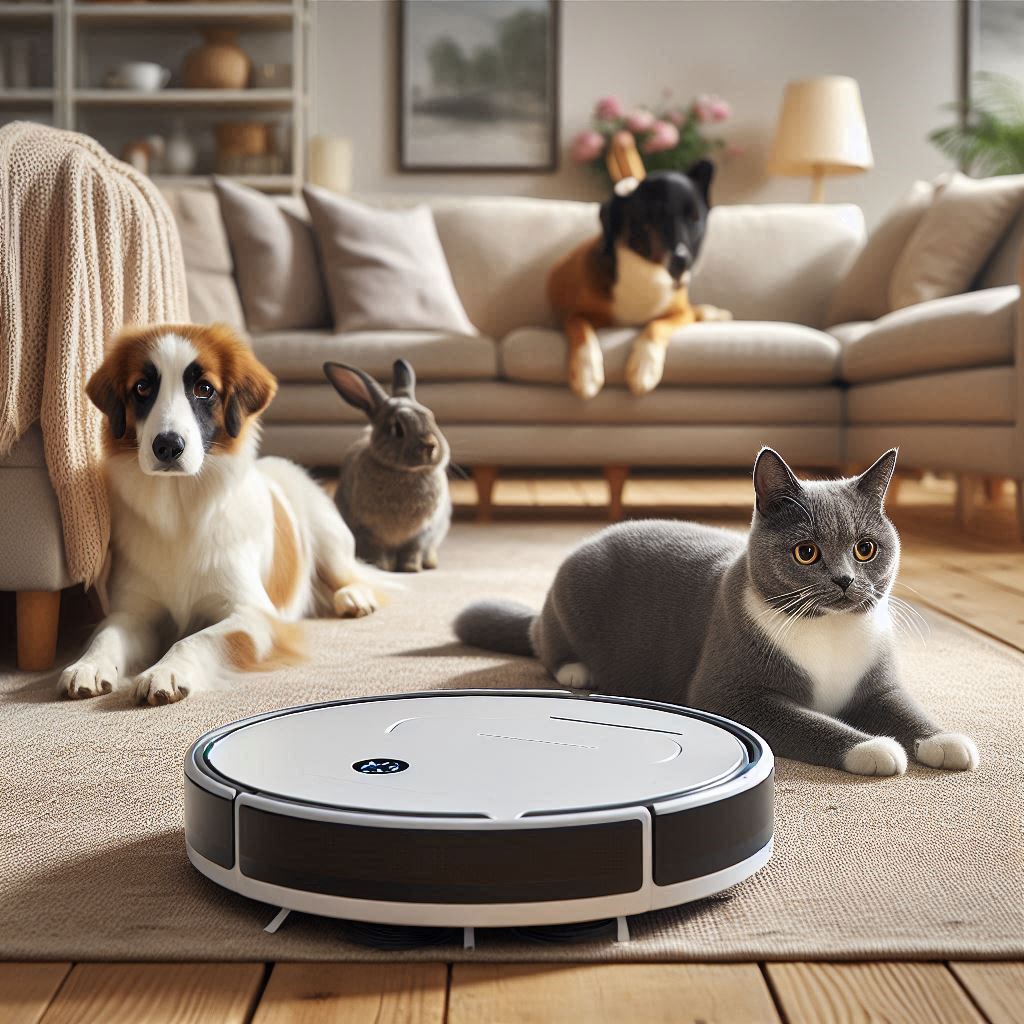
Robot vacuums are one of the best tools modern homes have for keeping floors clean, especially for families with cats and dogs who shed constantly. However, there’s a challenge many pet owners discover after buying their first robot vacuum: pets can be terrified of it. From barking dogs to cats sprinting under furniture, the interaction can be comedic for humans but stressful for animals.
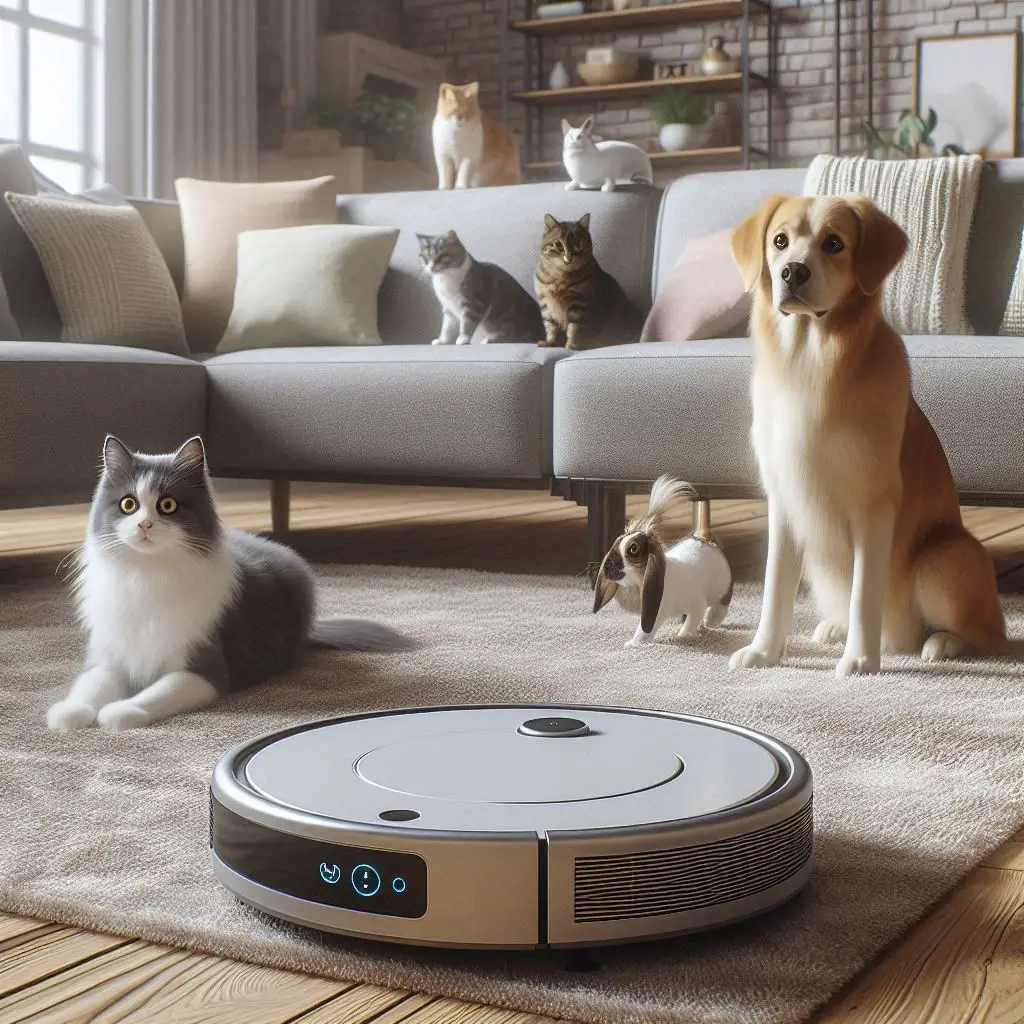
This guide focuses on understanding why robot vacuums scare pets, how to reduce anxiety, and how to choose pet-friendly robot vacuums that operate more quietly, more smoothly, and with less disturbing behavior. We’ll also share affiliate-style recommendations for models that have proven to be less intimidating to pets.
Why Do Robot Vacuums Scare Cats & Dogs?
Pets experience the world differently from humans. A robot vacuum introduces elements that trigger natural alarm responses:
1. Loud Motor Noise
Traditional vacuums are loud, but even robots can:
✔ hum, whirr, vibrate, or bump
✔ switch suction modes
✔ increase noise on carpet
To us, this blends into background noise. To pets with sensitive hearing, it can be overwhelming.
2. Unpredictable Movements
Cats and dogs rely heavily on body language signals. A robot vacuum:
➤ moves erratically
➤ turns sharply
➤ enters rooms unexpectedly
➤ chases pets unintentionally
This unpredictability can be perceived as a threat.
3. Territorial Instinct
Dogs especially are territorial. When a machine “invades” their space, they feel a natural urge to defend or bark at it.
4. No Familiar Scent
Animals identify objects by scent. A sterile machine with no recognizable smell feels foreign and suspicious.
5. Early Negative Imprinting
If the first experience was too loud or aggressive, pets may associate the machine with danger permanently unless retrained.
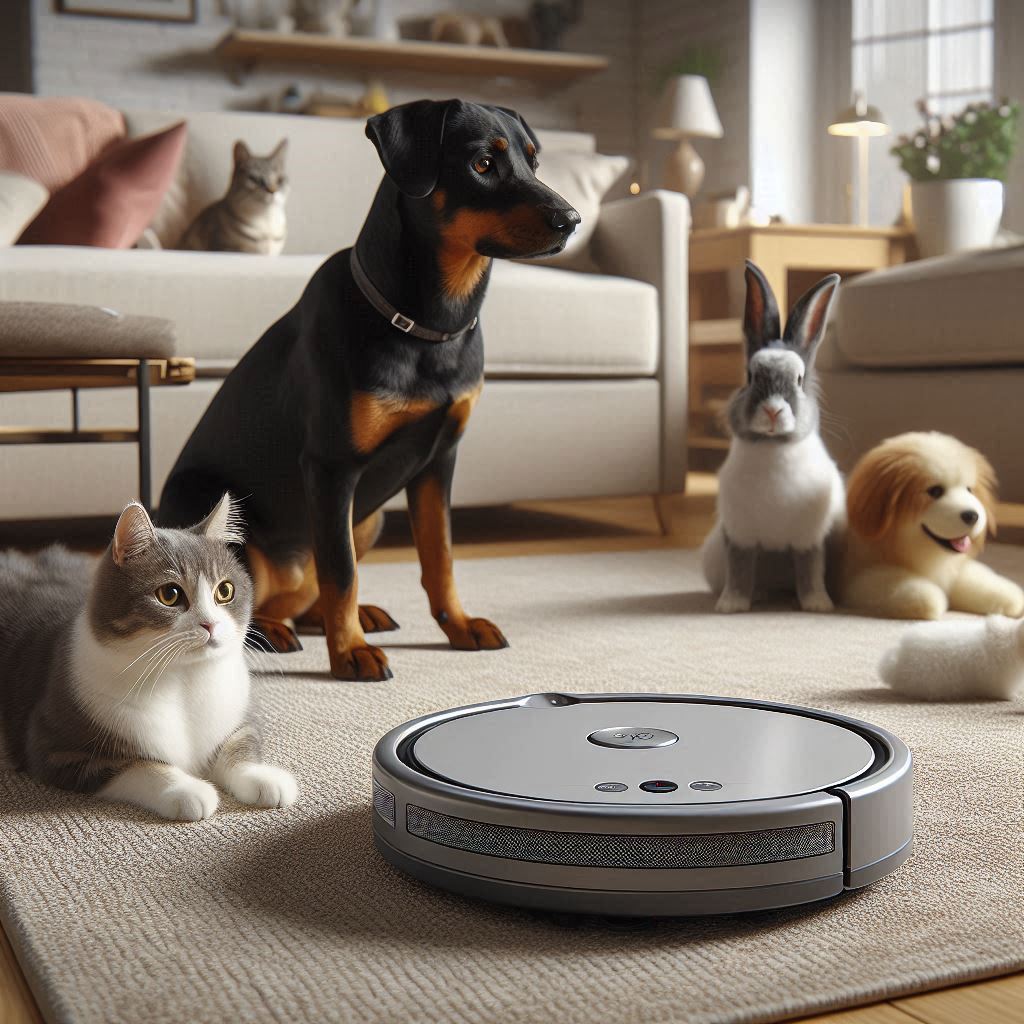
Signs That Your Robot Vacuum is Stressing Your Pet
Look for symptoms such as:
barking/meowing
pacing around the vacuum
hiding in another room
growling or hissing
refusing to enter areas with the robot
attacking or pawing at it
trembling or stiff posture
While funny videos online show dogs “fighting the vacuum,” owners should recognize it as anxiety, not entertainment.
Are All Robot Vacuums Scary for Pets?
Not necessarily.
First-generation robot vacuums were louder and less refined. Modern models vary significantly in noise output, movement style, and navigation intelligence.
More pet-friendly models tend to be:
✔ quieter (55–65 dB range)
✔ smoother while turning
✔ predictable via mapping
✔ equipped with pet-friendly brush rollers
By upgrading, many pet owners find their pets adapt quickly or even begin to ignore the machine.
Features to Look For in a Pet-Friendly Robot Vacuum
When shopping for a vacuum for a pet home, look for:
1. Low Noise Operation (dB Rating)
Noise level is the number one trigger for pet fear.
Ideal noise ranges:
- <55 dB = very quiet (best for anxious pets)
- 55–65 dB = moderate (acceptable for most)
- >70 dB = too loud (avoid for sensitive animals)
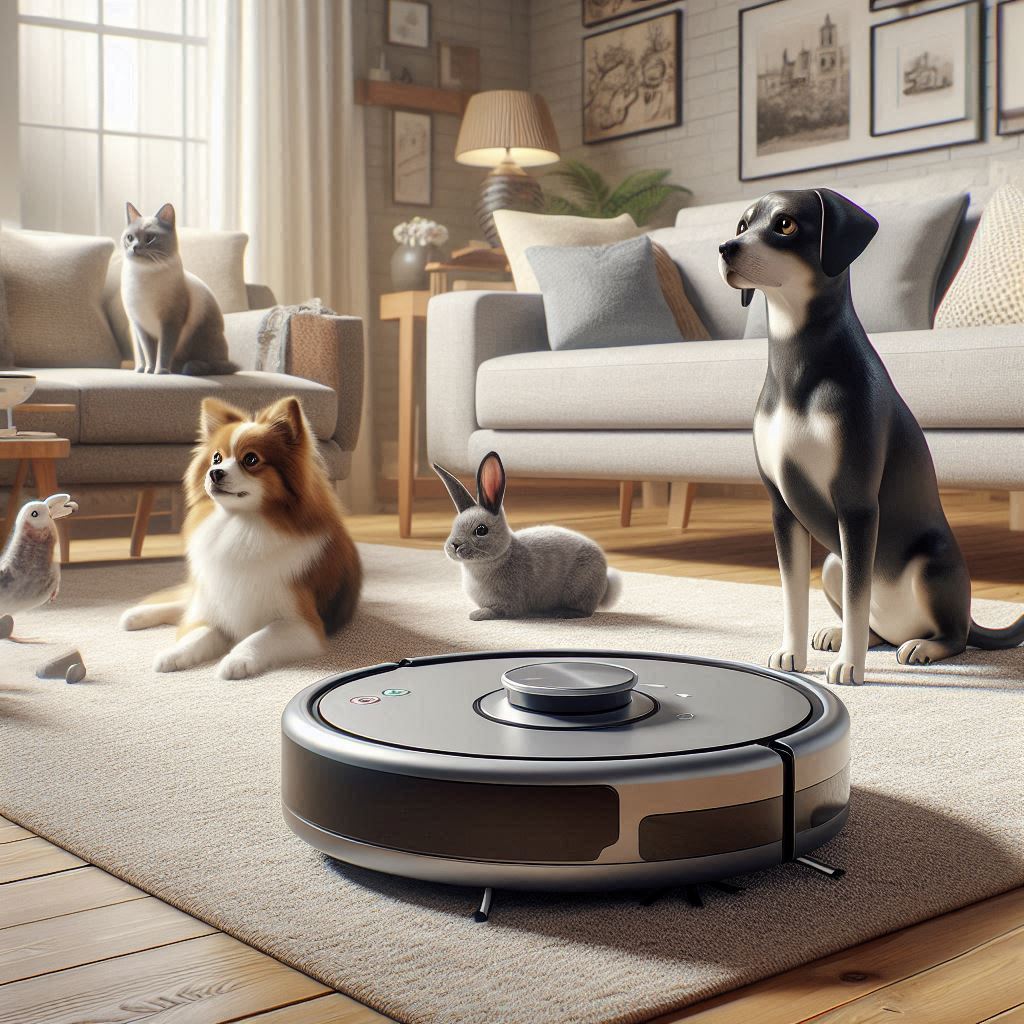
2. Smart Mapping and Predictable Movement
Mapping robots plan routes instead of bumping randomly. Pets feel safer when movement is:
✔ straight
✔ systematic
✔ slow at corners
✔ avoids close proximity
Random navigation makes pets feel chased.
3. Soft Acceleration + Collision Dampening
High-end models reduce bump force and slow down near obstacles, which makes the robot feel less aggressive.
4. Pet Hair Brush Roller
Prefer rubber rollers which:
✔ don’t tangle
✔ work on carpets
✔ reduce manual cleaning
✔ produce less cracking sound than bristle brushes
5. Quiet Carpet Boost Mode
Some robots increase suction when hitting carpet. Poor designs do it loudly and suddenly. Better ones ramp gradually.
6. Scheduled Cleaning
Night scheduling allows cleaning while pets sleep or are outside.
Amazon Affiliate Style Review — Best Pet-Friendly Robot Vacuums That Don’t Scare Pets
Below are robots known for quieter, smoother operation suited for pet homes.
1. Ecovacs Deebot T10 Plus Best Overall for Reducing Pet Anxiety
The Ecovacs T10 stands out because it runs quietly and uses AI navigation that smoothly avoids pets and toys.
Highlights:
- Quiet mode for sensitive animals
- AI obstacle avoidance bypasses pets instead of chasing them
- Rubber anti-tangle brush
- Self-empty station for hands-free maintenance
Pros:
- Quiet operation indoors
- Avoids approaching pets head-on
- Great for shedding animals
- Schedules well for nighttime cleaning
Cons:
Auto-empty station slightly louder but short duration
2. Roborock S8 Best for Calm Mapping + Predictable Movement
Roborock robots feel less threatening because they glide instead of stumble.
Highlights:
- LiDAR mapping for predictable paths
- Smooth corner turns
- 62 dB typical noise
- Dual rubber brushes for hair
Pros:
- Pets habituate quickly
- Good for carpeted rooms
- Movement is slow & controlled
- Not easily startled pets
Cons:
– Premium price point
3. Eufy RoboVac 11S Most Quiet Budget Option for Nervous Pets
If your pet panics easily, the 11S is one of the quietest models available.
Sound Profile: ~55 dB (whisper-level cleaning)
Pros:
- Super quiet vs competitors
- Minimal vibration
- Affordable and compact
- Ideal for hardwood and area rugs
Cons:
– Not ideal for thick high-pile carpets
– No advanced mapping features
How to Train Pets to Tolerate Robot Vacuums
If your pet currently reacts negatively, training helps significantly:
Step 1: Introduce While Powered Off
Let pets sniff and inspect it without fear.
Step 2: Start on Silent/Low Mode
Volume is the biggest anxiety trigger.
Step 3: Keep Distance at First
Operate it in another room while they observe.
Step 4: Don’t Chase Pets With It
Avoid pointing the robot toward them intentionally.
Step 5: Reward Calm Behavior
Treats help rewire emotional reactions.
Step 6: Schedule When Pets Are Relaxed
Best timing options:
✔ after morning feed
✔ during night sleep
✔ when pets are in backyard
Real Pet Owner Feedback Insights
Most owners report these stages of adaptation:
Week 1: fear / curiosity
Week 2: tolerance / observation
Week 3: boredom / coexistence
Week 4: ignoring completely
Cats adapt faster than dogs in many cases due to higher curiosity and independence.
Who Should Buy a Pet-Friendly Quiet Robot Vacuum?
Buy one if:
✓ you have anxious pets
✓ you have multiple shedding animals
✓ you want daily automated cleaning
✓ you prefer hands-free dust control
✓ you suffer from allergies
Avoid if:
✗ you only vacuum occasionally
✗ you don’t have pets
✗ you prefer manual deep-cleaning
✗ thick high carpets dominate your home
Can You Stop Robots From Scaring Pets?
Yes with the right robot and training strategy.
Modern quiet robot vacuums with smooth navigation and lower decibel output reduce stress dramatically and allow pets to coexist peacefully with the machine. For owners tired of fur tumbleweeds, hair-covered carpets, and frightened cats/dogs, upgrading is worth it.
A pet-friendly robot vacuum doesn’t just keep your home cleaner — it improves the emotional comfort of your animals while reducing your workload.

Related Posts