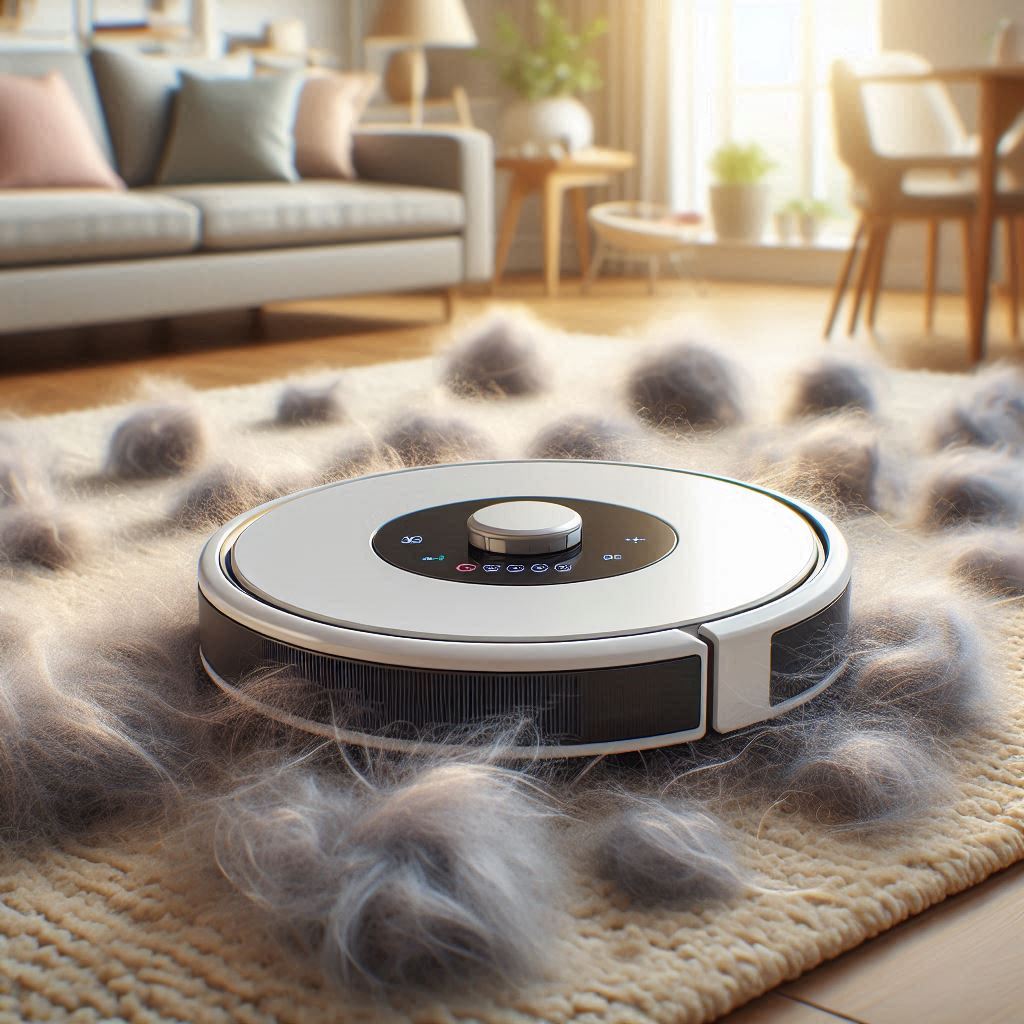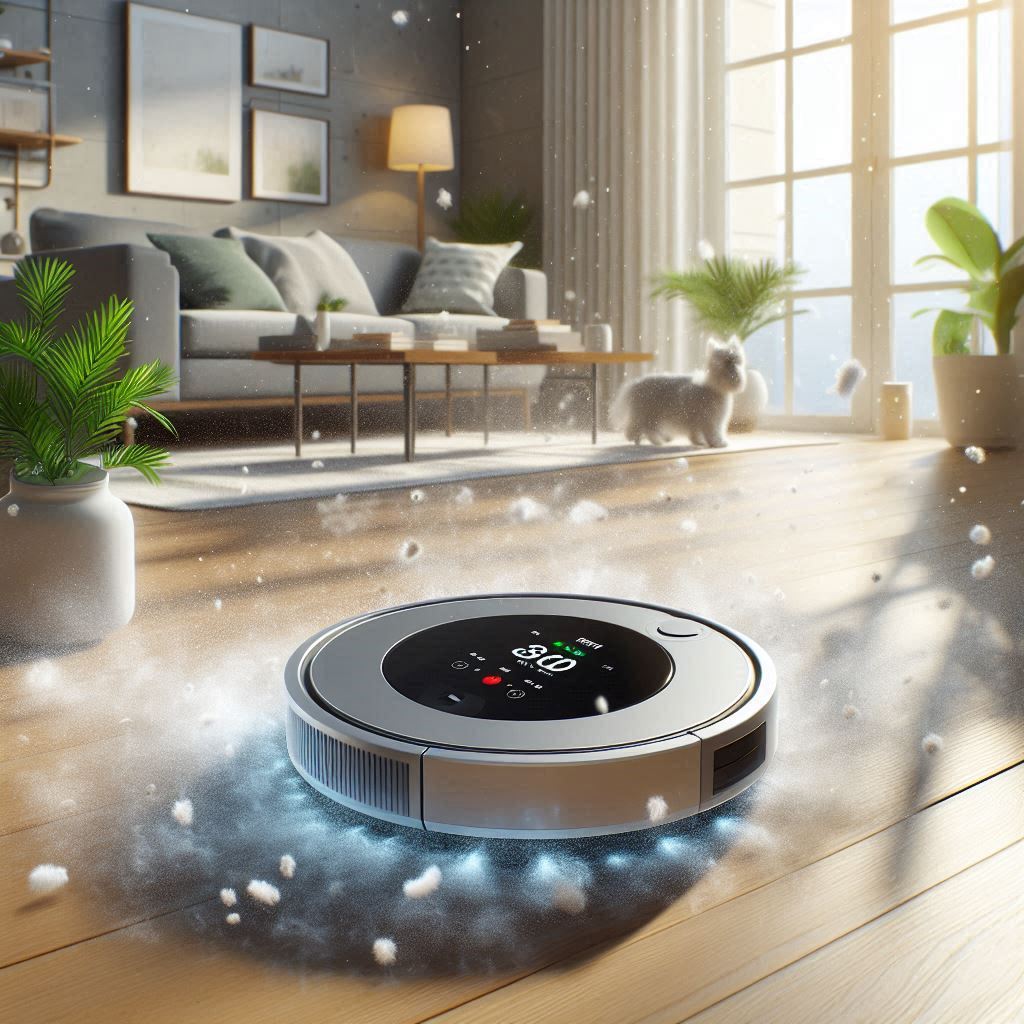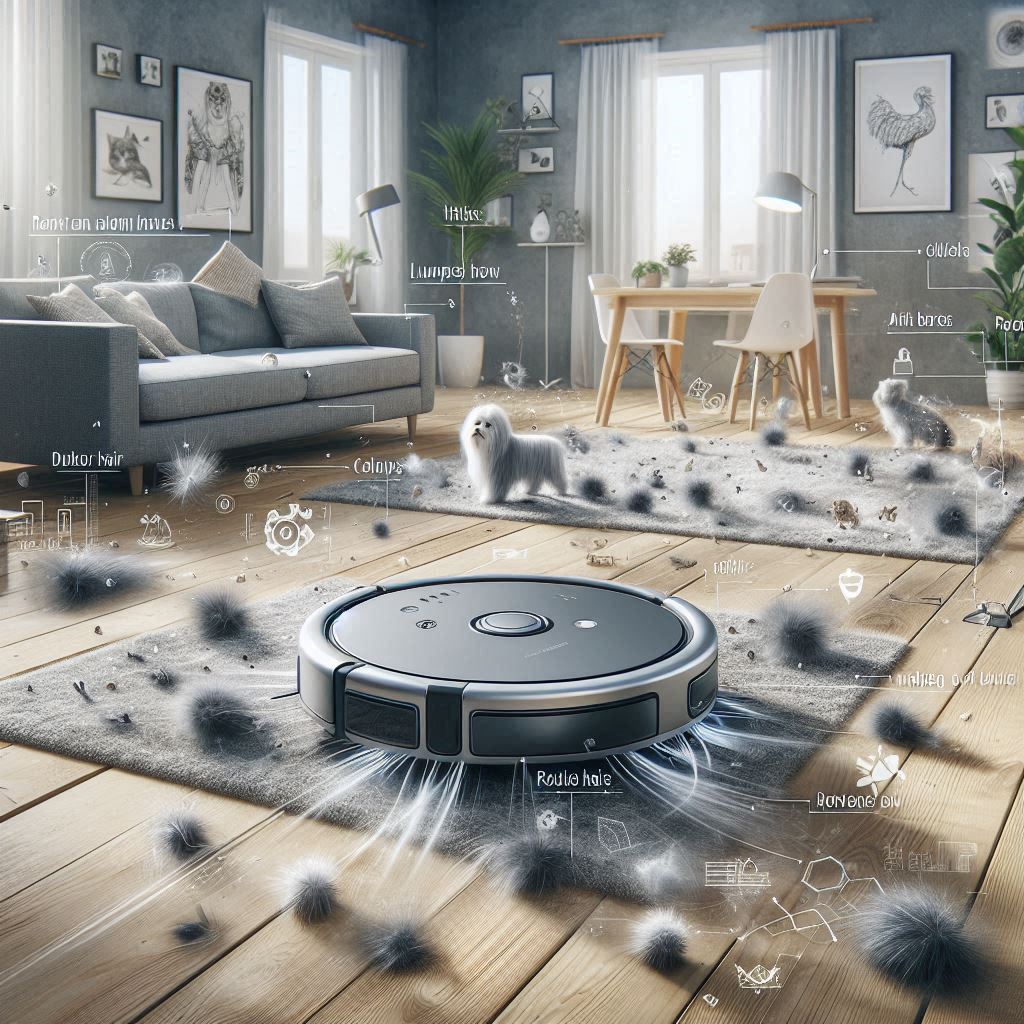

Robot vacuums have become essential tools for busy households—especially homes filled with pets. Dogs and cats are lovable companions, but their constant shedding demands frequent cleaning. While robot vacuums promise hands-free maintenance, there is one cleaning weakness that frustrates many pet owners:
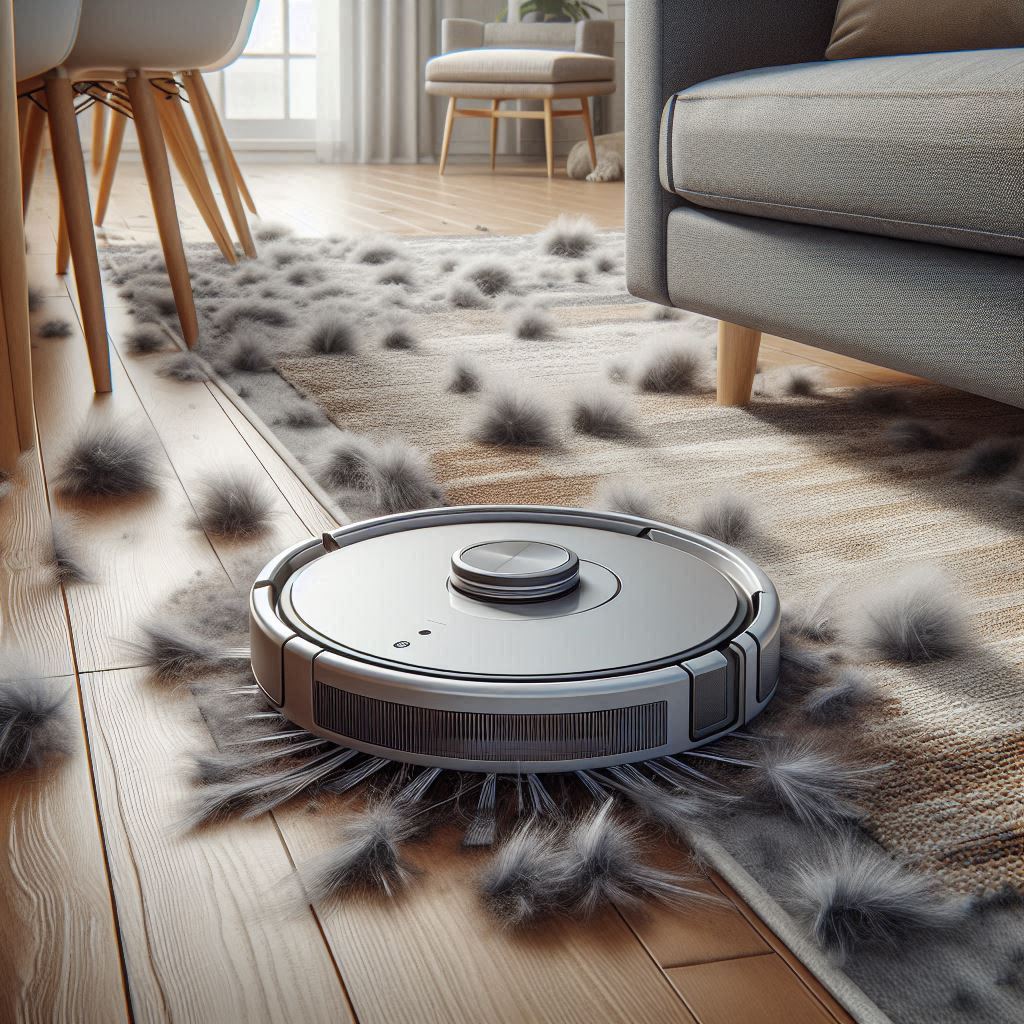
The robot vacuum often misses pet hair in corners.
Even premium models with strong suction and smart mapping can leave frustrating streaks of fur along edges, in corners, and around baseboards. For pet homes, these neglected areas quickly accumulate hairballs, dander, and dust bunnies.
In this guide, we break down why robot vacuums struggle in corners, what design factors cause the problem, and how to select a robot vacuum from Amazon that can actually capture pet hair in these tricky spots.
The Pet Hair Corner Problem: Why It’s Worse for Pet Owners
Pet hair collects heavily in corners for a simple reason: airflow and movement naturally push loose fur toward edges and low-traffic areas. Pets rarely sit in corners, but their movement across the center of the floor repeatedly sends hair rolling outward like tumbleweed.
Corners become the perfect trap for:
- Cat fur, especially fine strands
- Dog undercoat shedding
- Seasonal shedding clumps
- Dander and fine particulates
When robot vacuums fail to reach these areas, the visual result is obvious, especially on hard floors where fur is more noticeable.
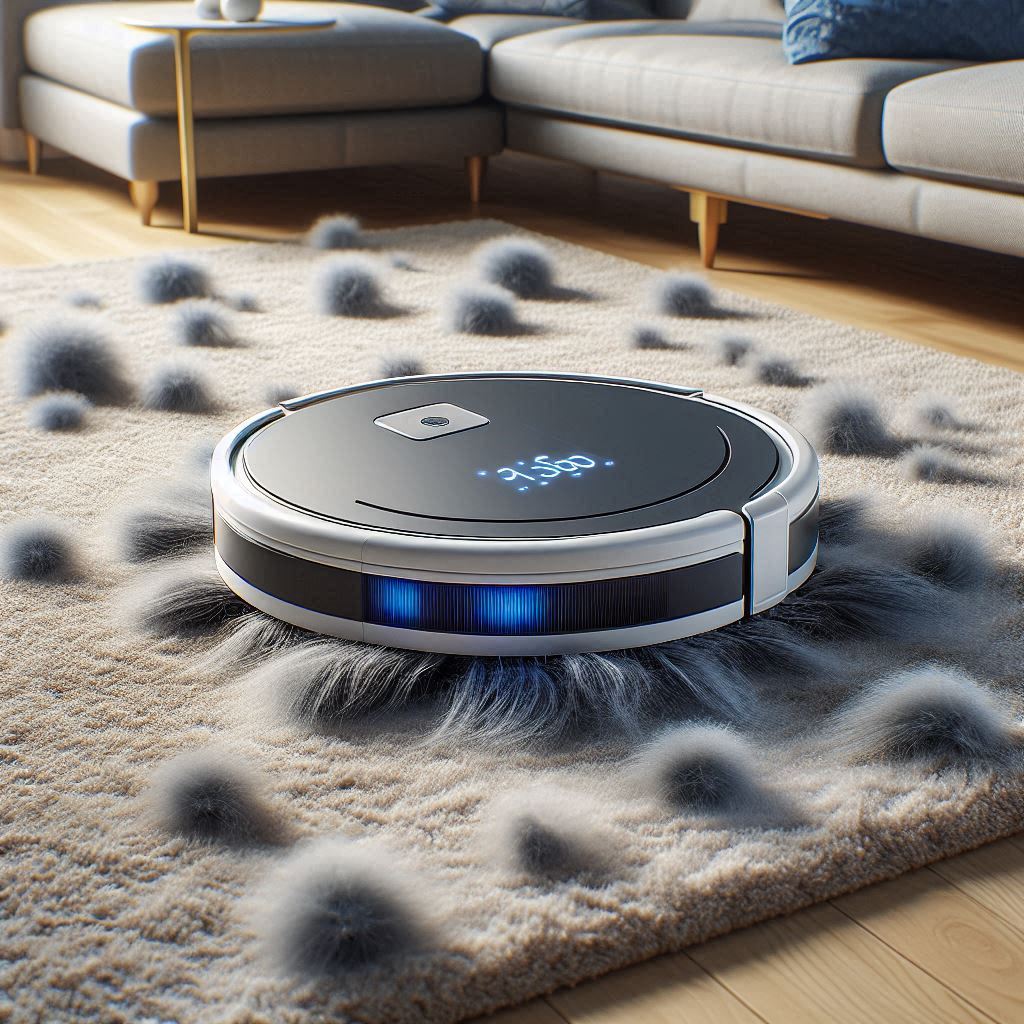
Why Robot Vacuums Struggle with Corners
Modern robot vacuums are circular for mobility and efficiency, but that design creates one unavoidable limitation:
A circle cannot naturally reach into a 90-degree corner.
Circular housings leave a gap that even side brushes cannot fully compensate for. While corner-specific cleaning is possible, it requires special engineering.
Let’s break down the common causes behind missed edge and corner hair.
1. Circular Body Limitations
A standard robot vacuum has a round chassis, which is excellent for navigating tight spaces and rotating without complex steering. However, a round design:
- Leaves sharp corners untouched
- Creates dead zones in wall junctions
- Prevents full edge-to-edge contact
When pet hair settles in these untouched zones, the robot simply rolls past without cleaning.
2. Weak or Poorly Aligned Side Brushes
Side brushes are supposed to sweep debris inward, but they vary tremendously in performance depending on:
- Length
- Rotation speed
- Angle
- Material stiffness
Weak brushes tend to:
- Scatter hair outward instead of inward
- Fail to make wall contact
- Flick hair beyond suction path
In pet homes, where hair strands are lightweight and static-prone, poor side brush performance becomes painfully obvious.
3. Suction Path Positioning Failures
Most robot vacuums place suction intake near the center of the unit. This is efficient for open floors but ineffective for edges, where pet hair collects. Even if side brushes sweep outward debris, it may not enter suction range.
A proper design requires:
- Extended edge suction
- Guided airflow zones
- Multi-stage debris routing
Only a small percentage of robot vacuums achieve this well.
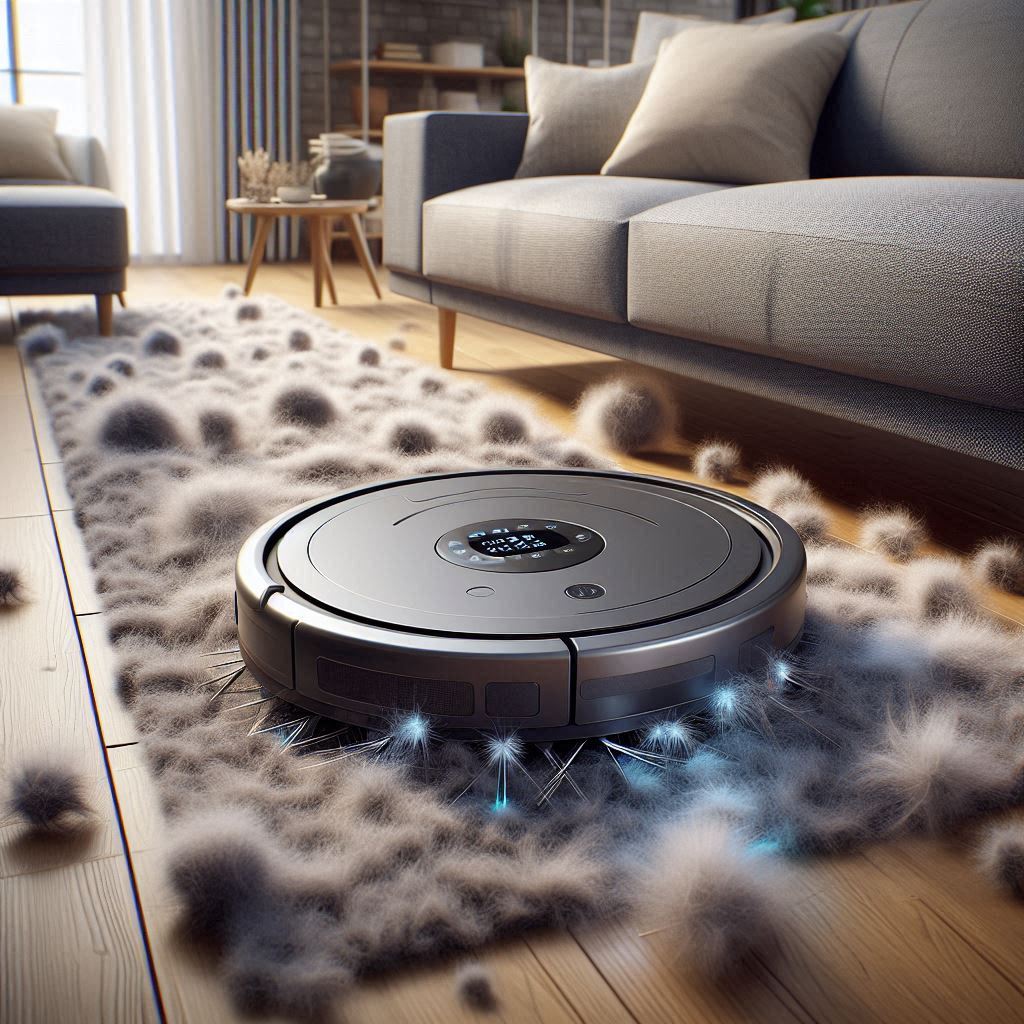
4. Floor Type Matters
Different surfaces reveal corner-cleaning weaknesses differently.
Hard Floors
Hair slides into corners and becomes compressed by airflow. The vacuum must physically reach it.
Carpets
Pet hair embeds along edges, especially under baseboards. Higher agitation is required to extract.
Many vacuums that do fine on carpet miss corner hair on hardwood, tile, or laminate.
5. Navigation Behavior
A surprising factor causing missed corners is how the robot chooses to navigate.
Low-end models use:
- Random pathing
- Minimal wall tracking
- Inconsistent edge passes
Premium models use:
- Wall-following algorithms
- Edge cleaning modes
- Secondary passes
Amazon reviewers often praise models that “hug the wall,” since wall-tracking increases cleaning accuracy around corners.
Pet Hair Is More Challenging Than Dust
Dust doesn’t cling, but pet hair does. Static, friction, and hair density make corners especially stubborn.
Pet hair:
- Sticks to walls
- Clings to baseboards
- Wraps around room geometry
A robot vacuum without strong edge-specific design will simply glide by and leave hair untouched.
Marketing vs Reality: What Amazon Ads Don’t Tell You
Most product descriptions highlight suction power, app control, voice commands, and battery life. Very few mention corner cleaning ability—because it exposes their weakness.
When reading Amazon listings, the real data lies in customer reviews. Search for terms like:
- “corners”
- “edges”
- “wall”
- “pet hair”
- “baseboards”
You’ll quickly see patterns that reveal true performance.
Technology That Fixes Corner Cleaning Issues
The good news? Some robot vacuums are designed to overcome corner limitations. They use a combination of hardware and software improvements.
1. D-Shaped Bodies
Unlike round robots, D-shaped designs can glide into corners more effectively. The flat front edge allows:
- Direct wall contact
- Deeper corner reach
- Better suction alignment
These models often outperform traditional circular robots for pet hair management.
2. Extended Side Brushes
Premium side brushes feature:
- Longer arms
- Faster rotation
- Multiple bristle materials
This ensures hair is swept inward instead of scattered outward.
3. Advanced Wall-Tracking Sensors
Sensors allow the robot to follow walls closely without crashing. This is essential for consistent corner cleaning.
Without wall tracking, the robot assumes edges are optional not mandatory.
4. Carpet Edge Agitation
Some premium vacuums increase suction temporarily when detecting edges. This is ideal for long-haired dogs and cats whose fur embeds along carpet lines.
5. Specialized Edge Modes
Models with dedicated edge routines perform:
- Slow-speed wall follow
- Increased brush pressure
- Secondary perimeter passes
This is the closest robot vacuums get to manual edge cleaning.
Maintenance: The Secret to Better Corner Cleaning
Maintenance influences corner cleaning more than most pet owners expect.
Pet hair trapped around the side brush reduces its reach. Wheel resistance reduces wall contact. Dirty sensors reduce path precision.
Key maintenance steps include:
- Cleaning side brushes weekly
- Removing hair from wheels and axles
- Wiping edge sensors
- Replacing worn brush arms
- Emptying bins regularly
Many negative reviews complaining about corner performance are actually describing maintenance neglect.
Amazon Review Insights: Pet Owners Know Best
After examining thousands of Amazon reviews, a clear trend emerges:
Negative Pet Owner Complaints:
- “Leaves hair in corners”
- “Doesn’t clean along baseboards”
- “Good on floors, terrible on edges”
- “Round design misses corner hair”
Positive Pet Owner Praise:
- “Great wall tracking”
- “Cleans corners surprisingly well”
- “Cat hair doesn’t accumulate anymore”
- “Flat front helps with edge cleaning”
These reviews match real-world performance far more accurately than brand marketing.
Final Verdict: Not All Robot Vacuums Are Equal for Corners
If you own pets, corner cleaning is not optional—it’s mandatory. Pet hair gravitates to edges, under baseboards, near doorways, and in room junctions.
The right robot vacuum should include:
✔ D-shaped design or superior side brushes
✔ Wall-tracking navigation
✔ Multiple edge passes
✔ Strong suction optimization
The wrong robot vacuum will leave visible hair behind and require manual sweeping—a complete defeat of the purpose.
Amazon Affiliate Tip
Before buying, filter reviews by Most Recent and search inside reviews for words:
- “pet hair”
- “corners”
- “edges”
- “wall”
- “cats” or “dogs”
This alone filters out overhyped models instantly.

Related Posts